
Discover how to plant and care for a container herb garden with expert tips from DH Landscape Solutions in Canada. Learn about soil, sunlight, watering, pruning, and landscaping ideas for integrating herbs into your outdoor space.
Why Culinary Herbs Belong in Your Landscape
For homeowners across Canada, landscaping isn’t only about manicured lawns or ornamental flowers. Increasingly, people are asking us at DH Landscape Solutions how to blend practical plants with beauty in their gardens. Few choices are as versatile and rewarding as culinary herbs.
Herbs add charm to patios and decks, fragrance to walkways, and fresh flavor to your kitchen. They save money, attract pollinators, and can even repel pests. Best of all, they thrive in containers – making them perfect for small backyards, balconies, or even as accents in larger landscape designs.
In this detailed guide, we’ll show you how to plant a culinary herb garden in containers, discuss soil and sunlight requirements, give watering and fertilizing tips, and share expert pruning strategies. As landscapers with more than 20 years of experience designing gardens across Canada’s diverse climates, we’ve seen firsthand how container-grown herbs can transform a space into something both beautiful and functional.
Why Grow Herbs in Containers?
Before diving into the planting process, let’s explore why container herb gardens have become a favorite among homeowners seeking landscape solutions in Canada:
-
Space Efficiency: Containers maximize growth in limited urban yards or patios.
-
Design Flexibility: Move them around to catch sunlight or change your outdoor design.
-
Climate Control: Containers can be sheltered during frost or heavy rains—essential in Canadian weather.
-
Pest Management: Many herbs naturally repel insects and animals, reducing pesticide needs.
-
Year-Round Use: Hardy herbs like rosemary, thyme, and sage can be overwintered indoors, keeping your garden productive through Canada’s colder months.
Grouping Herbs by Needs: The Key to Healthy Growth
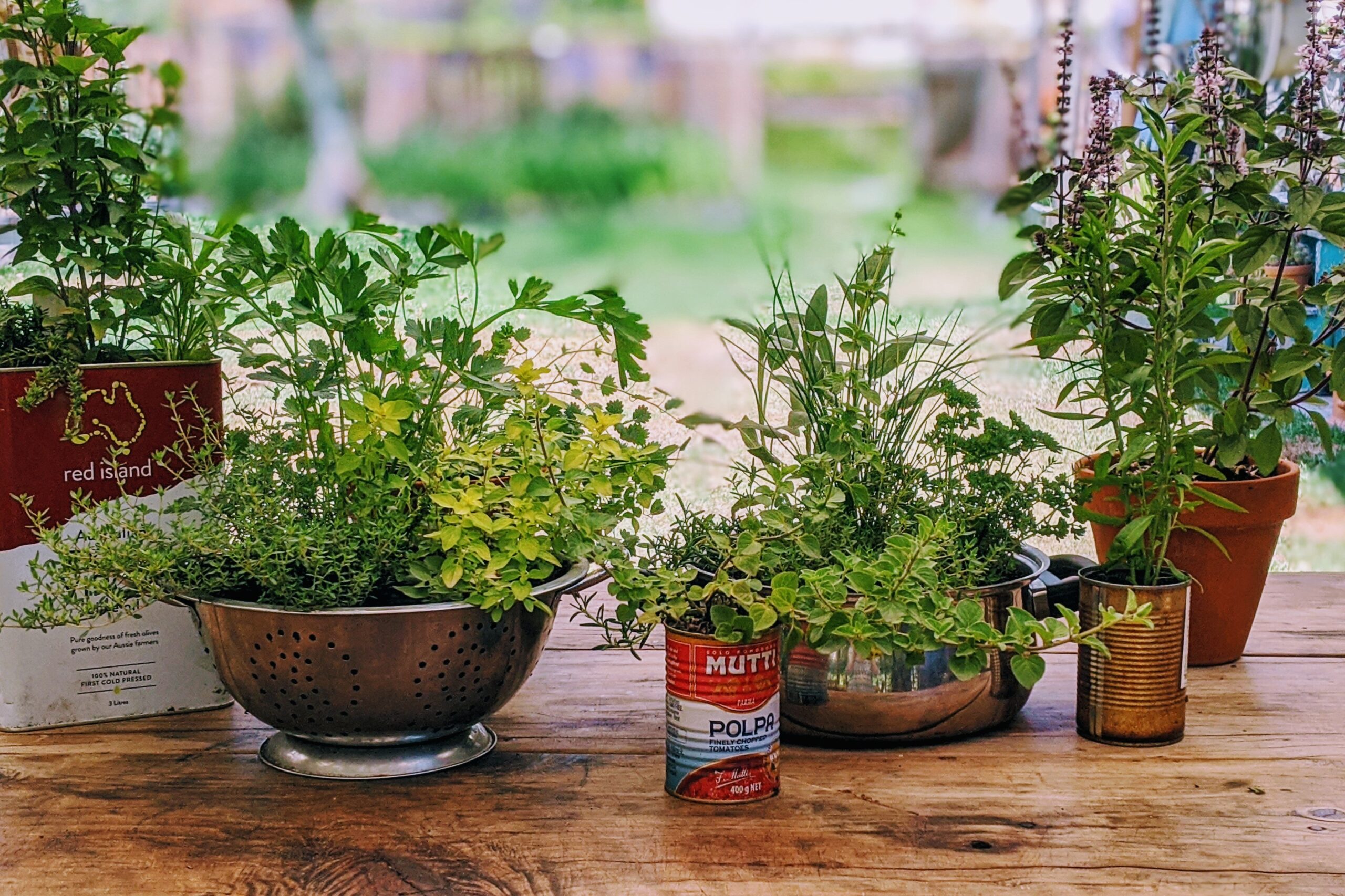
When planning a container herb garden, it’s important to understand that not all herbs share the same growing needs. Woody herbs such as rosemary, sage, oregano, thyme, and lavender thrive in sandy loam or leaner soils that drain well, requiring less frequent watering—about once a week to once every 10 days during summer and they perform best in full sun with six or more hours of direct light daily. In contrast, tender herbs like basil, parsley, cilantro, and mint prefer richer, moist, well-drained soil and need more frequent watering, particularly during hot weather. These softer herbs can also tolerate partial shade, making them a flexible option for spaces with only four to six hours of sun. At DH Landscape Solutions, we often design container arrangements by grouping woody herbs together and tender herbs together. This approach makes ongoing care much easier, helping homeowners avoid the common problem of over- or under-watering plants with very different needs.
Tip from DH Landscape Solutions: We often design container arrangements grouping woody herbs together and tender herbs together. This ensures consistent care without over- or under-watering certain plants.
Step-by-Step: Planting a Container Herb Garden
Here’s the exact method we use and recommend for homeowners across Canada:
1. Choose the Right Container
-
Size: At least 12–16 inches deep for root growth.
-
Material: Terracotta or wood for natural aesthetics; plastic or resin for lightweight durability.
-
Drainage: Always ensure multiple drainage holes.
2. Prepare the Soil Mix
For a balanced start, we recommend:
-
Tender herbs: Potting mix enriched with organic compost and worm castings.
-
Woody herbs: Potting mix blended with sand or perlite for better drainage.
3. Planting Process
-
Fill the container ¾ full with soil mix.
-
Create shallow indents for each herb.
-
Remove the herb from its nursery pot (moist soil helps).
-
Loosen the roots gently.
-
Place the herb at the same depth it was originally grown.
-
Backfill and press lightly around the base.
4. Positioning Herbs in Containers
-
Taller herbs like rosemary go toward the back.
-
Creeping herbs like oregano go near the front edges.
-
Sage and lavender fill the middle beautifully.
5. Label Your Plants
This is not only practical but adds charm to your container arrangement.
Special Considerations for Mint
Mint deserves its own section because of its growth habit. It spreads aggressively through underground runners. Planting mint directly in the ground can lead to it taking over garden beds.
Our recommendation: Always plant mint in a dedicated pot or window box-style container. This controls spreading while still letting you enjoy its refreshing foliage and flavor.
Watering Tips for Canadian Landscapes
Container gardens dry out faster than in-ground beds. Here’s how to handle watering:
-
Check soil moisture: Insert your finger about an inch into the soil. If it feels dry, water.
-
Avoid splashing leaves: This prevents disease-causing pathogens. Always water the soil directly.
-
Seasonal adjustments: In warm provinces like British Columbia, you may water daily in summer. In cooler regions like Alberta, every 2–3 days may suffice.

Fertilizing Your Container Herb Garden
At DH Landscape Solutions, we emphasize organic practices. If your potting mix contains compost and worm castings, you may not need fertilizer in the first year. Herbs derive much of their strength from the sun.
For ongoing nutrition:
-
Apply a diluted organic liquid fertilizer (like seaweed extract) every 4–6 weeks.
-
Avoid over-fertilizing—too much nitrogen can reduce essential oil concentration, weakening flavor.
Pruning and Harvesting for Maximum Yield
Pruning herbs is both a care technique and a harvest method. Done right, it encourages bushier, healthier plants.
Rules for Pruning
-
Never prune more than one-third of a plant at once.
-
Focus on trimming just the tops to encourage branching.
-
Remove dead or diseased leaves promptly.
Timing
-
Prune every few weeks during the growing season.
-
The best time to harvest is early morning, when essential oils are most concentrated.
-
For drying, harvest herbs just before they flower.
Benefits of Regular Pruning
-
Prevents plants from going to seed (which reduces flavor).
-
Improves air circulation, reducing disease risk.
-
Keeps container arrangements neat and proportional.
Perennial vs Annual Herbs in Canadian Landscapes
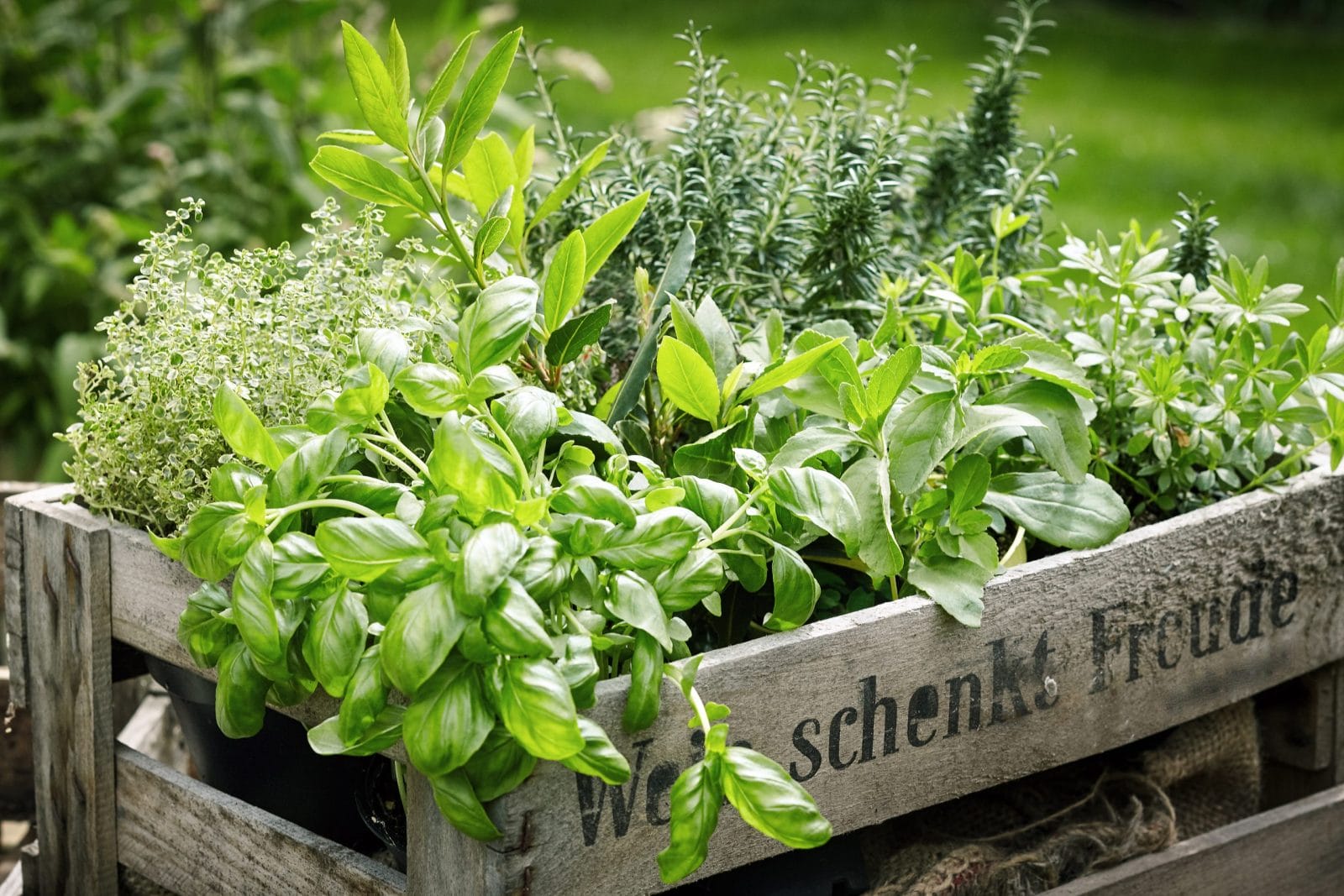
Not all herbs behave the same across Canada’s climate zones. Knowing which are perennial (return each year) versus annual (one season only) helps plan your landscape design.
-
Perennial Herbs: Rosemary (in warmer zones), sage, thyme, oregano, mint, lavender.
-
Annual Herbs: Basil, cilantro, parsley (biennial but often grown as annual).
Landscape tip: Use perennials as the “anchor” plants in your design, then rotate annuals each season for fresh variety.
Landscaping Ideas: Integrating Herbs into Your Outdoor Space
Container herb gardens don’t have to be purely functional. With creative design, they can enhance the look of your patio or backyard.
-
Clustered Container Displays: Grouping terracotta pots of varying heights creates a rustic, Mediterranean feel.
-
Raised Planters: Wooden or metal raised beds allow for larger herb collections and easier access.
-
Mixed Borders: Combine herbs with flowering plants—lavender next to roses, or basil alongside marigolds.
-
Edible Walkways: Place containers along a path for fragrance as you walk by.
-
Balcony Solutions: Use railing planters or vertical wall planters for space-saving herb displays.
At DH Landscape Solutions, we often recommend combining culinary herbs with ornamental perennials to create multi-purpose landscapes that are visually stunning and practical.
Companion Planting Benefits
One overlooked advantage of herbs is their ability to act as natural companions to other plants.
-
Pollinator Attraction: Lavender, thyme, and oregano draw bees and butterflies.
-
Pest Repellent: Basil deters mosquitoes, rosemary repels carrot flies, and mint discourages ants.
-
Animal Deterrent: Strong-smelling herbs can reduce browsing from deer or rabbits.
This makes herbs a perfect sustainable addition to modern Canadian landscapes.
Overwintering Herbs in Canada
Canada’s climate presents challenges for year-round herb gardening. Here’s how we advise clients:
-
Bring Containers Indoors: Place near sunny south-facing windows.
-
Use Grow Lights: Supplement daylight during short winter months.
-
Insulate Outdoor Pots: Wrap containers with burlap or bubble wrap to protect roots.
-
Choose Hardy Varieties: Sage, thyme, and oregano often survive mild Canadian winters outdoors with protection.
Common Mistakes to Avoid
Over our two decades in landscaping, we’ve seen homeowners make similar errors when growing herbs in containers. Avoid these pitfalls:
-
Overwatering, which leads to root rot.
-
Crowding too many herbs with different needs into one pot.
-
Ignoring pruning, causing leggy, weak plants.
-
Planting mint without containment.
-
Using poor-draining soil mixes.
Correcting these ensures long-term success and healthier, more productive plants.
Frequently Asked Questions
1. Can I grow herbs year-round in Canada?
Yes, but most herbs need to be brought indoors or grown under lights during winter, especially in colder provinces.
2. How often should I fertilize container herbs?
Every 4–6 weeks with a diluted organic liquid fertilizer is sufficient.
3. Which herbs are easiest for beginners?
Parsley, basil, oregano, and thyme are forgiving and resilient.
4. Can herbs survive Canadian winters outdoors?
Some hardy perennials like thyme and sage can, but most benefit from indoor overwintering.
5. Are container herbs suitable for professional landscaping projects?
Absolutely. Container herbs enhance patios, restaurant courtyards, and residential designs with both visual and culinary value.
Conclusion: Why Herbs Elevate Modern Landscaping
Planting a container herb garden is more than a gardening project—it’s a lifestyle choice. With the right containers, soil, pruning, and design, herbs can add texture, fragrance, and function to any landscape.
At DH Landscape Solutions in Canada, we’ve seen how a simple herb arrangement can transform an outdoor space into a living, breathing extension of the home. Herbs connect beauty with practicality, and they remind us that sustainable landscaping isn’t only about appearance—it’s about creating spaces that nourish, inspire, and endure.
Call to Action
Looking to add a culinary herb garden to your home? Whether you need design inspiration, full-service landscaping, or seasonal maintenance, DH Landscape Solutions in Canada is here to help.
Visit us at:
3742 West 10th Avenue, Vancouver, BC
Contact DH Landscape Solutions Today for expert advice tailored to your space.
